A Place to Work
Historically, the vibrancy and success of many town centres has been closely linked to the presence of workers and the daily rhythms created by patterns of employment and learning.
Office workers, students and staff within education providers have traditionally provided a regular source of activity, supporting local businesses, services and the wider town centre economy.
Changing patterns of work, including the growth of remote and hybrid working, are reshaping how people use and experience our urban centres. While this presents challenges for traditional office-based activity, it also creates new opportunities for towns to capture the benefits of more flexible working patterns, particularly beyond larger city locations.
Town centres must strengthen their role as places to work, learn and collaborate by providing a diverse mix of workspaces, educational opportunities and supporting amenities. Creating environments that encourage interaction, innovation and productivity will help maintain daytime activity, support local economies and build long-term resilience.
By embracing new models of employment and learning, town centres can remain adaptable, vibrant places that support changing lifestyles and provide opportunities for people to live, work and connect locally.
New Workplace

Reintroducing residential uses into town centres must be balanced with a wider mix of activity to avoid creating areas that lack life and vitality during working hours. The future of town centres depends on creating places that support a range of daily rhythms, with opportunities to live, work, learn and connect.
The way we work is changing, creating an opportunity to introduce flexible workspaces that bring daytime activity, support collaboration and enable healthier work-life patterns. As remote and hybrid working become increasingly embedded, there is a growing need for accessible local workspaces, shared facilities and support services that provide an alternative between working from home and travelling to larger employment centres.
These flexible work environments can play a key role in reactivating underused spaces, including vacant upper floors and former retail premises, while adding diversity and resilience to the town centre economy. When visible, accessible and integrated into the wider community, they can help reduce barriers to employment by supporting carers, people returning to work and younger people entering the workforce. The principle of “if you can see it, you can be it” highlights the importance of creating visible pathways into work, enterprise and opportunity.
By creating inclusive and adaptable places to work, town centres can become productive, connected environments that respond to changing patterns of employment while strengthening their role as everyday destinations.
Educate
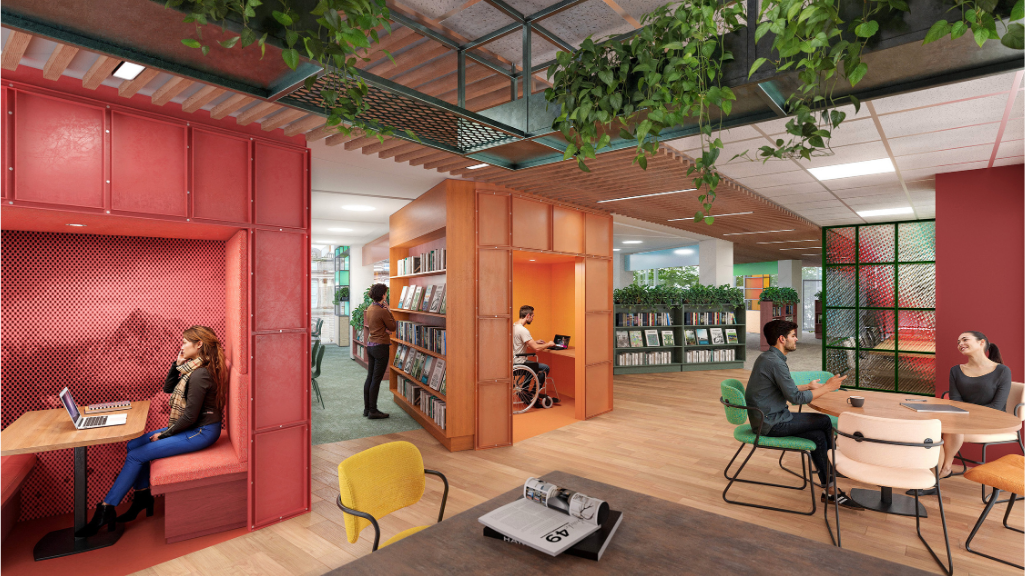
Encourage established education providers, training organisations, and community groups to increase or establish a presence within the town centre. Alongside traditional educational institutions, promoting lifelong learning opportunities will enable people of all ages and backgrounds to develop new skills, improve employability, build social connections, and reduce digital exclusion. This will foster a greater sense of empowerment, enhance wellbeing, and create a more inclusive town centre.
The vitality of the town centre can be strengthened by repurposing vacant and underused buildings for educational uses. Integrating learning facilities into existing premises will increase activity throughout the day and evening, support the reuse of existing assets, and contribute to a more vibrant and resilient town centre.
Higher education institutions have the potential to attract a diverse student population from both the local area and further afield, creating demand for purpose-built student accommodation. Opportunities should be identified to introduce appropriately located and scaled student residential developments that complement the town centre, support local businesses, and contribute to a vibrant mixed-use environment.
Work collaboratively with further and higher education providers to bring learning into street facing properties. Making education more visible within the town centre will reinforce its vibrancy, improve accessibility, and encourage lifelong learning opportunities for the wider community.