Connected Streets and Spaces
Streets and public spaces form the familiar framework of every town centre. They shape how people move, meet and experience a place, and play a vital role in encouraging healthier, more sustainable ways of travelling.
The town centres of the future will prioritise people over vehicles, creating places that are easier to walk, cycle and access by public transport. Reducing the dominance of private cars allows streets and spaces to become more connected, welcoming and adaptable, supporting everyday activity as well as markets, events and community gatherings.
A well-connected network of streets, lanes and public spaces improves permeability, encourages exploration and helps create a lively town centre where people choose to spend more time. These spaces become the setting for daily life, strengthening local identity and supporting businesses, culture and community interaction.
Green infrastructure is fundamental to this approach. Trees, planting, rain gardens and other soft landscaping create more attractive and comfortable places while providing shade, shelter and opportunities to pause and gather. They also help manage surface water, improve biodiversity and build resilience to the impacts of climate change, making town centres healthier, more sustainable and better equipped for the future.
Connect
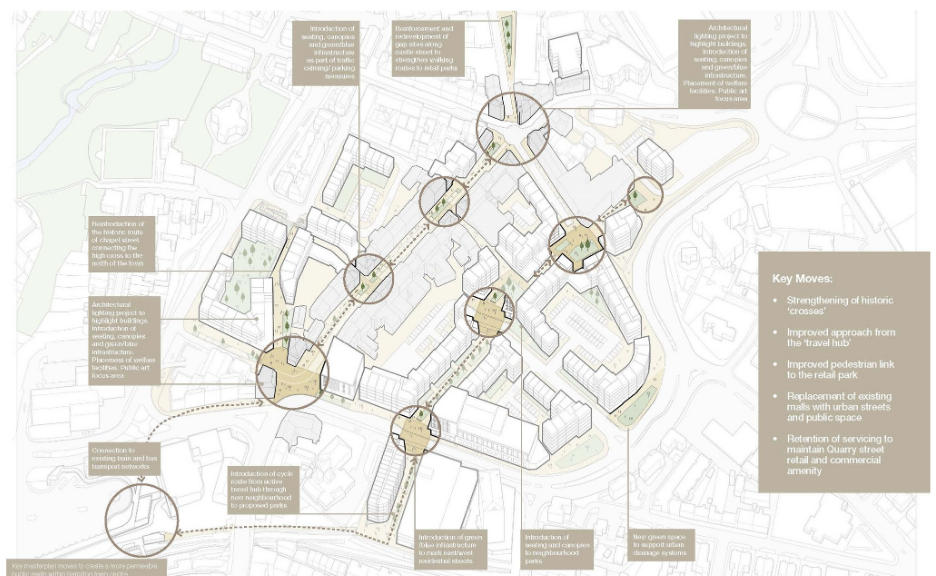
Safe, attractive walking and cycling routes should connect neighbourhoods with the town centre, supported by reliable and environmentally sustainable public transport. Improving these connections encourages healthier lifestyles, reduces unnecessary car journeys and helps ensure that everyone, including those without access to a car, can easily reach the services, opportunities and activities the town centre provides.
Over time, car ownership is likely to decline as travel choices diversify but, in the meantime, town centres must remain accessible to those who rely on the car, ensuring equality of access for residents, businesses and visitors alike. The challenge is to accommodate vehicles without compromising the quality of the urban environment.
Clear, legible routes into the town centre, well-located parking and intuitive wayfinding can improve the visitor experience while reducing unnecessary traffic. Measures such as pedestrianisation should be carefully considered and tailored to local circumstances, balancing the creation of safe, people-focused streets with the need to maintain access, visibility and vitality for town centre businesses.
Gather
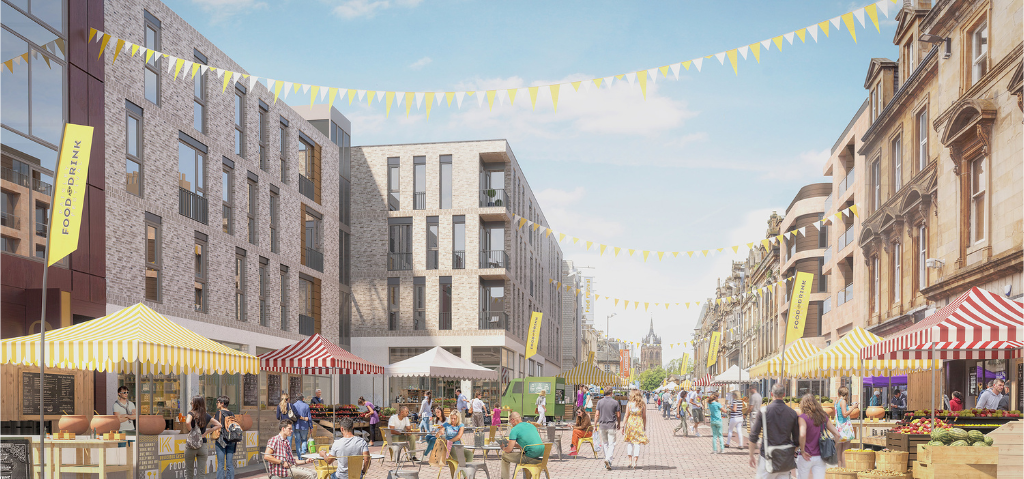
Re-energise the town centre by creating a network of urban places that enrich everyday life and provide settings for events, activities and experiences that attract both local residents and visitors.
These external ‘rooms’ should become vibrant, adaptable spaces that support year-round use. The focus should be on creating places, not just spaces — environments with active edges, human-scaled enclosure, and integrated greening that encourage play, wellbeing, social interaction and a stronger sense of community.
Each place should be enhanced through a range of shelter and comfort measures, enabling all-weather use, safe gathering, and flexible occupation during changing needs. By combining landscape, activity, and thoughtful design, these spaces can become welcoming destinations that support everyday life while providing memorable settings for events and civic activity.