Rebalance, Repurpose and Repair
Changing patterns of retail have transformed our town centres, creating significant challenges but also presenting a once-in-a-generation opportunity to rethink their future.
Rebalancing our town centres is central to creating more sustainable, resilient and inclusive places. Increasing the number of people living, working and spending time in our centres makes better use of existing infrastructure, supports public transport and reduces the need to travel by car. It also delivers greater value from previous financial and carbon investment.
Town centres are our most democratically accessible places. They connect communities, services and transport, making them the most equitable locations for investment in homes, workplaces, public services and community facilities. This particularly benefits those who are less likely to own a car, including younger people, older people and lower-income households.
Many historic town centres now have more retail space than demand can support, with fewer large retailers requiring extensive floorplates. Rather than seeking to replace what has been lost, there is an opportunity to reshape these places around a more diverse mix of uses.
The future lies in concentrating retail where it is strongest and most impactful while repurposing surplus space for housing, flexible workspaces, cultural activity, education, leisure and community uses. By reintroducing these functions into the heart of our towns, we can create vibrant, mixed-use centres that are active throughout the day and evening, strengthen local economies and restore town centres as the natural focus of community life.
Rebalance
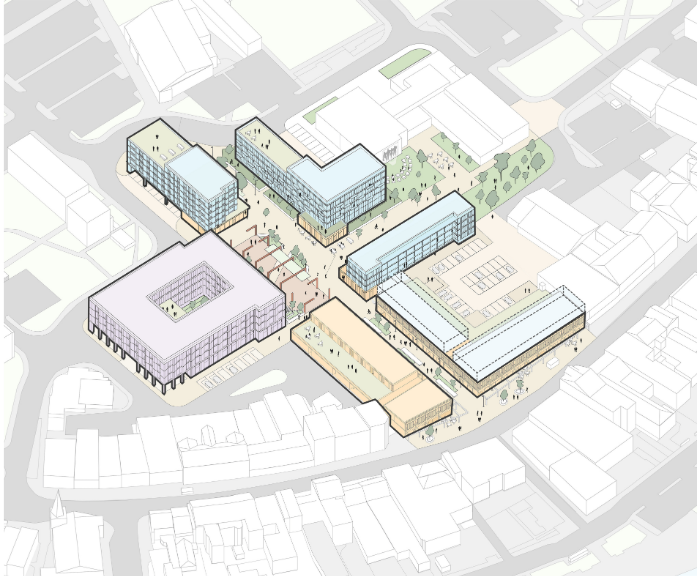
A vibrant town centre is created through diversity rather than separation. Instead of zoning areas into single-purpose ‘arts quarters’ or ‘business districts’, a more finely grained, blended approach creates places where different activities, people and generations naturally interact.
This mix of uses builds resilience, encourages social and economic exchange, and creates town centres that are active throughout the day and evening. Distinct character areas can enrich the visitor experience, provided they retain a healthy balance of complementary uses.
Retail remains an important part of this mix. Shops will continue to have a place on the high street, but the future of retail is likely to be more independent, compact and experience-led. The loosening of the retail dominance that previously ‘squeezed’ other uses from the town centre now presents an opportunity to move beyond the ‘clone town’ model of the 1980s and 1990s towards centres with a stronger local identity and a more distinctive offer.
Rather than attempting to replace lost retail demand, the focus should be on creating the right amount of retail in the right locations. Smaller, flexible units are better suited to the growing number of independent businesses, makers and artisan traders. Concentrating retail along active street frontages also creates stronger, more walkable shopping streets, reversing the trend of inward-facing shopping centres that drew activity away from the public realm.
By combining homes, workplaces, culture, leisure, community services and independent retail within a connected urban fabric, town centres become more adaptable, more resilient and more attractive places to live, work, visit and invest.
Repurpose and Repair
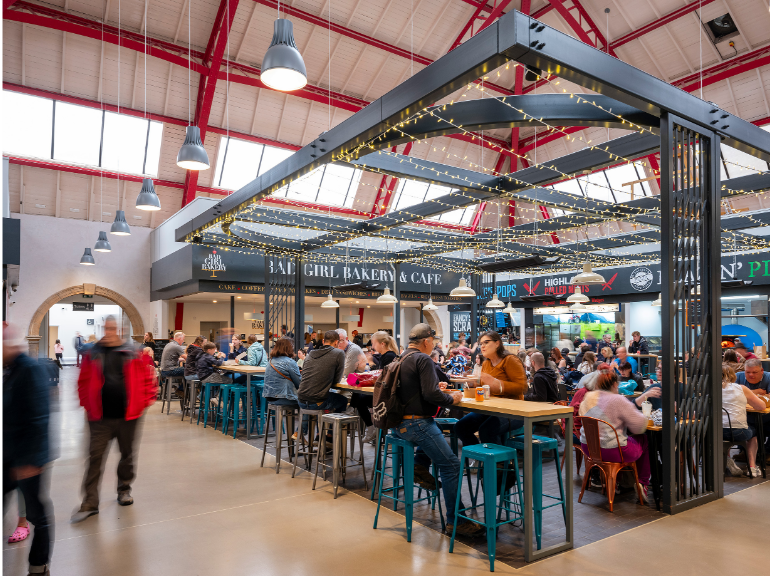
Many town centres benefit from a rich legacy of historic buildings alongside more recent vacant or underused structures. Together, these buildings represent a valuable opportunity to repurpose existing assets, support a more balanced mix of uses and breathe new life into the town centre.
As the carbon intensity of our energy supply continues to fall through increasing renewable energy production, the embodied carbon locked within existing buildings becomes increasingly significant. Reusing and adapting buildings is therefore a key principle of sustainable development and is strongly supported by National Planning Policy Framework 4, with a clear presumption in favour of reuse wherever practical.
Retaining existing structures conserves embodied carbon, reduces demolition waste and minimises localised pollution and disruption to communities. In many cases, adapting what already exists is both the most environmentally responsible and economically viable approach. However, there will be circumstances where replacement is justified—particularly where buildings cannot be effectively repurposed or where greater density is needed to support a more sustainable and vibrant town centre. In these cases, new development should demonstrate exceptional design quality and contribute positively to the long-term carbon balance of the place.
Large, single-use buildings—such as shopping centres, department stores or redundant civic buildings—often present the greatest opportunity for transformational change, particularly as they are generally in single ownership. Repurposing these sites can act as a catalyst for wider regeneration, introducing new homes, workplaces, cultural and community uses while reconnecting the surrounding streets. Breaking down oversized blocks into a network of streets, lanes and public spaces improves permeability, restores activity at ground level and helps repopulate the heart of the town.
Meanwhile
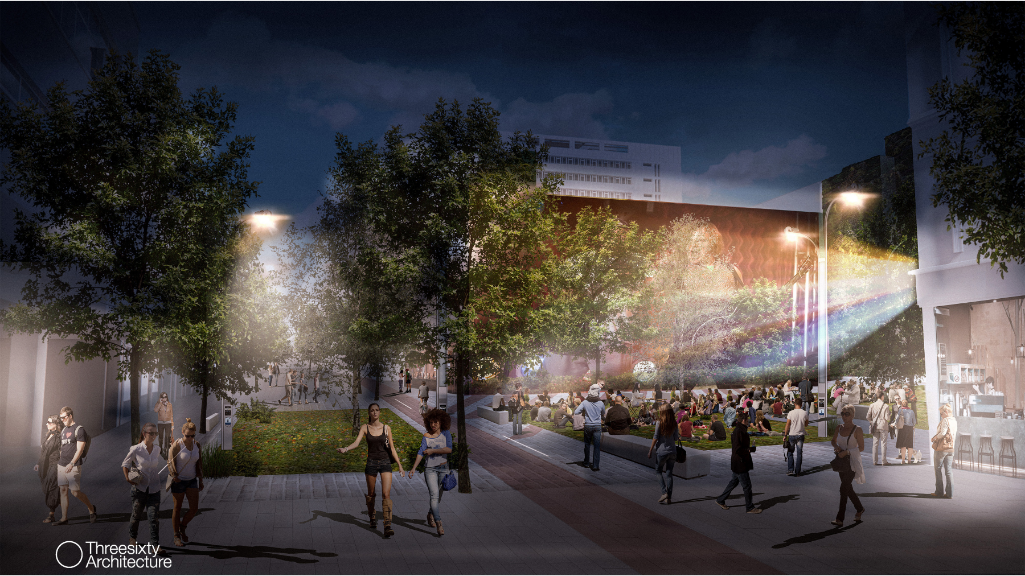
Town centre transformation takes time, and not every project can be delivered immediately. In the meantime, vacant buildings and sites should be viewed as opportunities rather than liabilities.
Long-term vacancy can undermine confidence, reduce footfall and detract from the character of a town centre. Introducing temporary or ‘meanwhile’ uses helps maintain activity, support local enterprise and demonstrate visible progress while longer-term plans are developed. Even temporary interventions on part of a site can enable a phased approach to larger regeneration projects, preventing prominent locations from remaining dormant throughout what can often be lengthy design, approval, procurement and construction programmes.
Vacant buildings can provide affordable space for independent retailers, start-up businesses, artists, community and voluntary organisations, and cultural activities. Underused sites can become temporary public spaces, gardens, markets, event venues or pop-up uses that attract people back into the town centre and encourage new forms of activity.
By keeping empty buildings and sites active and accessible, meanwhile uses create momentum, test new ideas, build community ownership and maintain confidence in the town centre while permanent regeneration projects are brought forward.